B2B SaaS · 0→1
Building Keep's
Building Keep's
First Enterprise
Product

Context
Keep is China's leading online fitness platform with 40M+ MAU. Its core business model was B2C — premium subscriptions, e-commerce, and self-developed fitness hardware. But as Keep reached market leadership, this model hit a ceiling. The company needed a second growth curve.
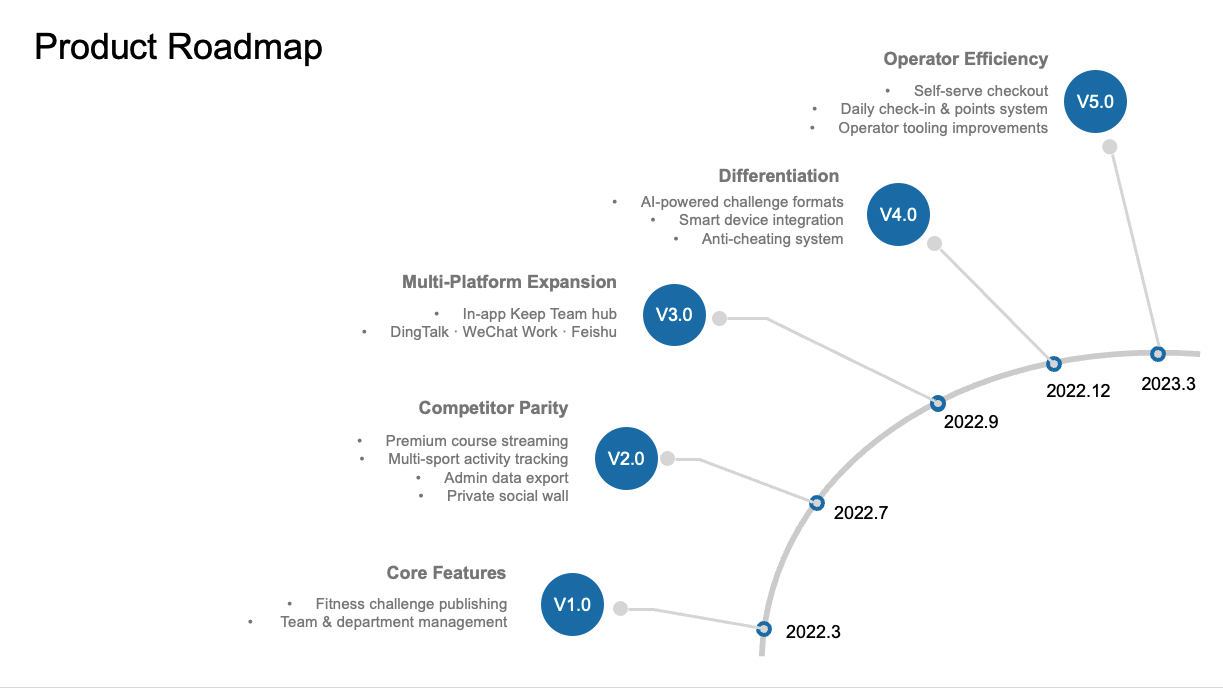
We weren't actively marketing our B2B offering, yet inbound enterprise inquiries were already coming in. But our deal conversion rate was only 6.9% — and among all lost deals, 90% failed not because of pricing, but because we lacked features that competitors had been offering as standard for years.
My Role
Ownership areas:
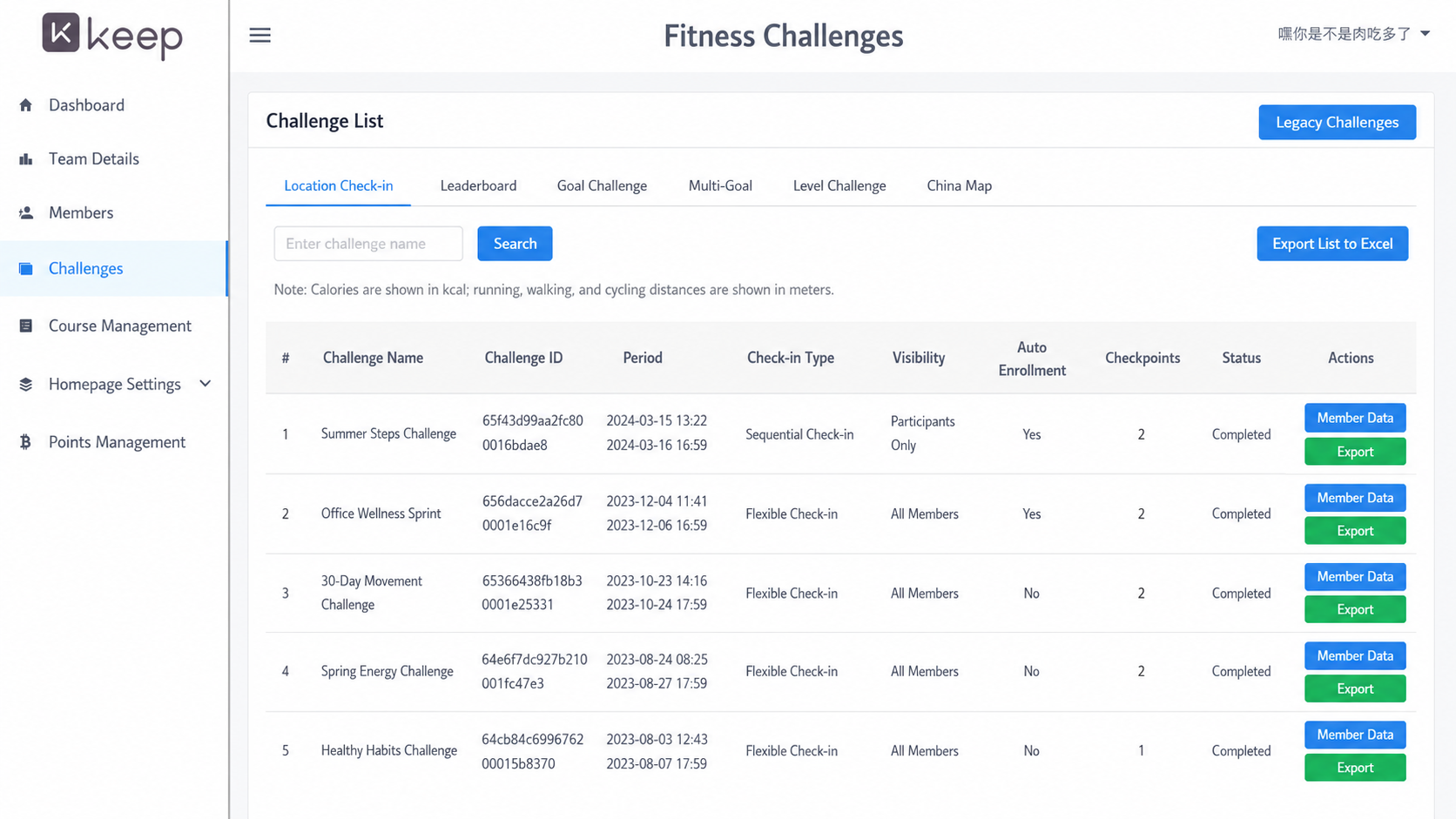
I was the sole Product Manager on this project, working directly under the B2B business lead. I owned the full product lifecycle — roadmap, prioritization, and trade-offs across iterative release cycles. I also joined client meetings firsthand to explain product capabilities directly, rather than relying on sales-filtered feedback.
Key Decisions
DECISION 01
While competitors had a head start on core features, Keep had assets they didn't: a certified sports science team, national-level athletes producing tailored training programs, and an integrated hardware and e-commerce ecosystem.
I mapped these internal capabilities against what a comprehensive corporate wellness solution would require, then drove cross-functional partnerships to bundle them into our offering. Where alignment was blocked at my level, I escalated strategically, bringing in the business lead to close those conversations.
The result was a tiered solution — Basic, Advanced, and Custom — each bundling product features with Keep's proprietary training content at different price points. The member discount required buy-in from both sides' leadership. I built the business case and brought in the business lead to close it.
Not every internal capability made it into the bundle. Keep's hardware and e-commerce products couldn't be included; the cost structure made discounting unfeasible at the enterprise level.
SOLUTION TIERS
Basic
Advanced
Everything in Basic, plus:
Custom
Everything in Advanced, plus:
DECISION 02
One of the hardest calls was pausing feature delivery to rebuild our multi-platform architecture. We were shipping separately across Keep's native app, WeChat Mini Program, DingTalk, and Feishu — every release multiplied our engineering effort.
To align the sales team, I translated the technical case into the metric they cared about most: delivery time. Without the refactor, future feature releases would take 3x longer as client volume scaled. That framing landed.
The unified codebase cut per-release engineering effort significantly. Every subsequent feature shipped once, not four times. Engineering capacity that had gone into maintaining parallel codebases was redirected to closing the feature gap with competitors.
The Result
First-Year Revenue
Brand Wall



Selected Artifacts